Editorially reviewed: October 30, 2026.
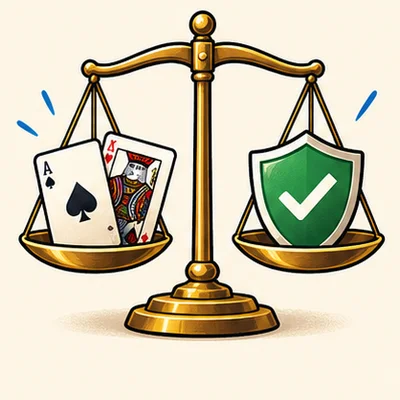 Blackjack cheating involves dishonest interference with play or payment. It should not be confused with learning basic strategy or doing mental arithmetic. This guide focuses on recognising problems, following procedures and reporting concerns—not on instructions for cheating.
Where the distinction matters
In Nevada, the statutory definition of cheating addresses altering elements of chance, the method of selection, payment criteria or the amount or frequency of payment. The same chapter separately prohibits specified devices and other fraudulent conduct. These are Nevada examples; other jurisdictions have their own definitions. NRS 465.015, 465.070, 465.075 and 465.083
Protect yourself during play
- Keep your wager clear and follow the dealer’s instructions about when betting closes.
- In a face-up shoe game, leave cards on the table and use the approved signals.
- If a payout or hand appears wrong, ask the dealer to pause before the next round.
- Ask for a supervisor to explain the rule or review a disputed payment.
- Do not touch another player’s chips, cards or wager.
A mistake is not proof of cheating
A dealer error, a losing streak or an unexpected result does not establish fraud. First check the payout, the table rules and the sequence of events. Describe what you observed without accusing staff or another player of an offence.
How to report a concern
Record the venue, table identifier, approximate time, game and disputed amount. Ask the supervisor for the complaint process. For an online game, retain the round ID and relevant support correspondence, while keeping account and payment details private. If the operator does not resolve the complaint, use the regulator or dispute process named for that operator and jurisdiction.
Learning strategy safely
Use our rules guide, basic-strategy charts and free practice game. They teach decisions without changing game equipment, exploiting staff or interfering with other players. If play stops being enjoyable, our responsible-gaming guide lists support options.



 Bovada Casino