Blackjack Terms

Learn the language of blackjack

Have you run into a blackjack term that you haven’t seen before? While blackjack is a fairly easy game to play, there’s a lot of lingo that can seem almost foreign to a new player. We’ve put together a list of common blackjack terms and definitions that should get you up to speed.

Explore 22 illustrated definitions, from your first hit to the finer points of strategy. Illustrations explain the concepts; exact playing rules vary by table.

Watch the insurance lesson · Try free practice

Illustration: An illustrated strategy booklet and playing cards

A collection of the mathematically best plays in every situation given the rules being used in a blackjack game. A basic strategy chart will tell the player what to do, given his hand and the dealer’s up card. However, it will not consider other cards seen or the current composition of the shoe, as done when card counting.

Illustration: Three chip stacks showing a range of bet sizes

A common technique used by card counters to change their bet size without drawing attention from casinos.

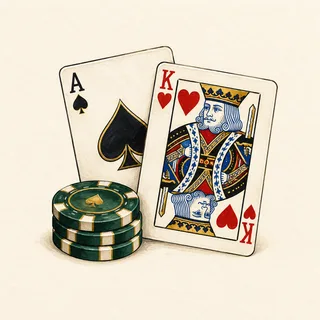
Illustration: An ace and a king forming a natural blackjack
Blackjack

Link

Along with being the name of the game, a blackjack is also the name given to a hand consisting of an ace and a ten-point card. It is the best possible starting hand, and normally automatically wins for the player at odds of 3-2, though some casinos may offer lesser odds. If the dealer has a blackjack, all player hands immediately lose, except for blackjacks, which push.

Illustration: A trophy and competing chip stacks at a blackjack table

Tournaments offer players the chance to compete against other players instead of against the house.

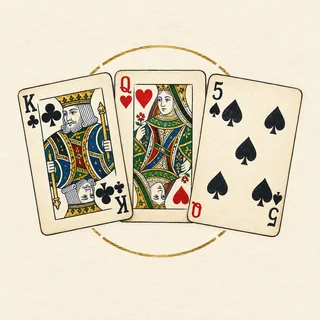
Illustration: A king, queen and five forming a hand over twenty-one
Bust

Link

A hand is said to bust when it reaches a point total of 22 or more. If a player busts by going over 21, he immediately loses all bets on that hand. If the dealer busts, all players still in the hand automatically win.

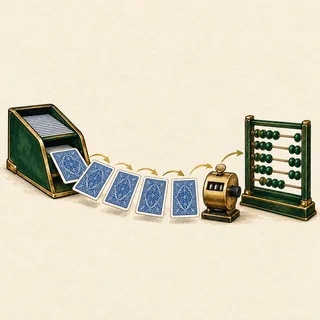
Illustration: Cards beside a tally counter and counting beads

This is a process in which a player takes into account the cards that have already been removed from the shoe when determining their strategy. The most common adjustment made is to bet more money when the shoe is rich in cards that are good for the player, and bet less (or stop playing) when the remaining cards tilt the odds in favor of the house. However, card counters may also make adjustments to when they take insurance, when they surrender, or even to basic strategy plays based on the remaining cards in the shoe. These adjustments can leave the player with an advantage over the house.

Card counting is not illegal, but casinos may refuse to allow known card counters from playing blackjack. Card counting cannot be used in games that continuously shuffle the cards after each hand, such as in most online blackjack games.
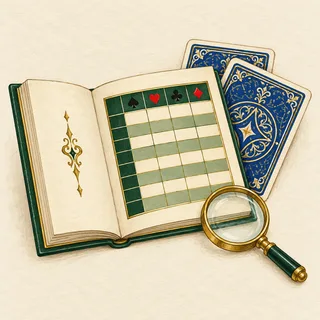
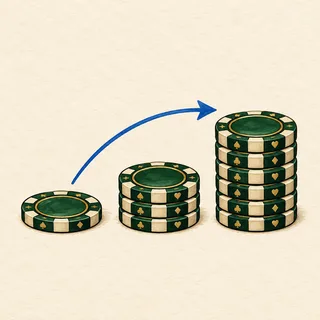
Illustration: Equal chip stacks and one additional card
Double Down

Link

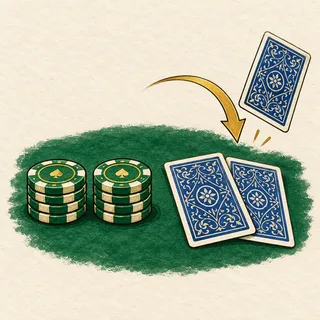
This option allows the player to make a second bet in exchange for one more card, after which they must stand. This is typically only allowed on the first two cards a player receives. This allows the player to wager more money in advantageous situations, such as when holding an 11-point hand against a lower dealer up card.

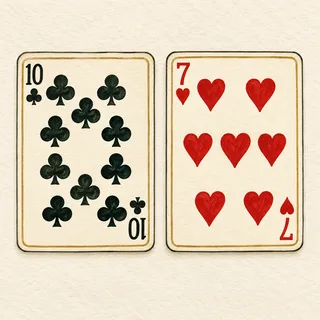
Illustration: A ten and seven forming a hard seventeen
Hard

Link

A hard hand is one in which there is not an ace, or where the ace is only worth one point. Contrast to a soft hand.

Illustration: A hand adding a card to a blackjack hand
Hit

Link

Taking an additional card for your hand is called hitting. This is one of the two main options a player can use when playing their hand; the other is standing. Typically, dealers must hit with hands of 16 or less.

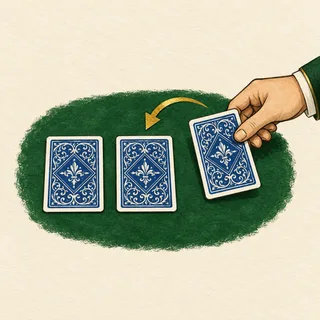
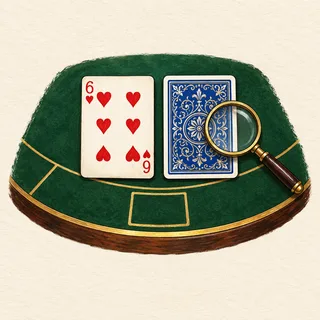
Illustration: A face-down dealer card beside a visible six
Hole Card

Link

The dealer card which the players cannot see until it is revealed at the end of the hand. In many casinos, the dealer will peak at the hole card at the beginning of the hand in order to check for a blackjack if the dealer up card is an ace or a ten.

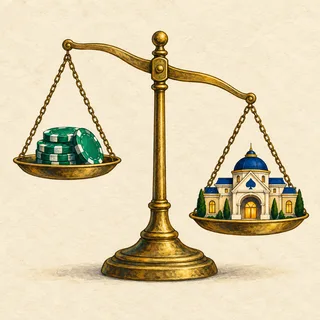
Illustration: A balance scale with casino and chip symbols

The advantage or edge is what the casino holds over the players, expressed as a percentage of each initial bet the player makes. Usually, the house edge is given based on the optimal basic strategy; player mistakes can significantly increase the house edge. However, it also doesn’t consider card counting or other techniques that may tilt the odds in the player’s favor. Rule changes can also have a significant impact on the house edge.

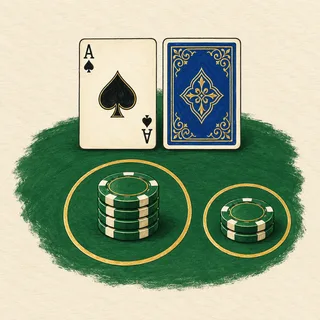
Illustration: An ace upcard and a separate insurance betting circle
Insurance

Link

If the dealer has an ace as their up card, each player will be offered insurance for half the price of their initial bet. If the dealer has a blackjack, the insurance bets pay off at 2-1 odds, meaning that players who have made the insurance bets will break even (since they still lose their initial bet). This is also offered to players who have a blackjack, who can get even money on their blackjacks instead of 3-2; mathematically, this is exactly the same as the insurance bet offered to other players.

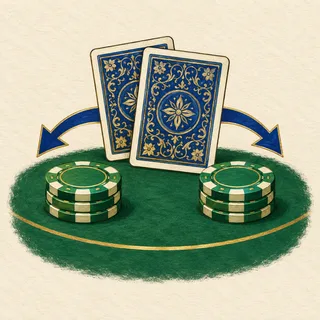
Illustration: Equal chip stacks with returned-stake arrows
Push

Link

If the dealer and the player have hands of the same value, the player’s bet neither wins or loses; instead, it is considered a push. In other words, the player keeps their bet, but doesn’t win any additional money.

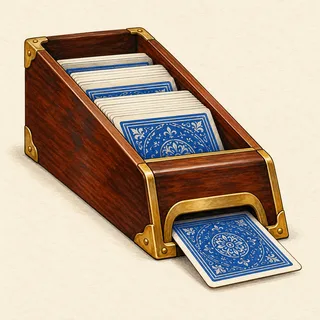
Illustration: A wooden dealing shoe holding playing cards
Shoe

Link

The device which holds the cards from which the blackjack game is dealt. In live casinos, shoes are typically made up of anywhere from 1-8 decks. In online blackjack, casinos may even have shoes made up of an infinite number of decks, meaning that removing a card from the shoe has no impact on which card is dealt next.

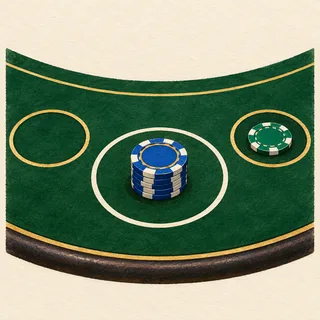
Illustration: Separate side-bet circles beside a main betting circle

Blackjack tables often times have additional games that can be played along side the blackjack game. It often costs an additional ante and the result is independent of the blackjack hand result.

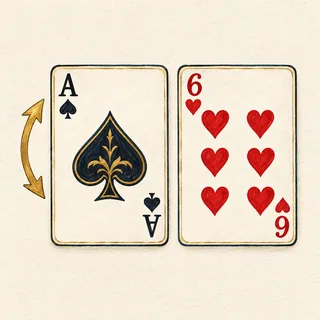
Illustration: An ace and six forming a soft seventeen
Soft

Link

A hand that includes an ace that still counts as 11 points. Soft hands cannot bust by taking an additional card, since the ace can revert to counting as just one point if necessary. Contrast to hard hands.

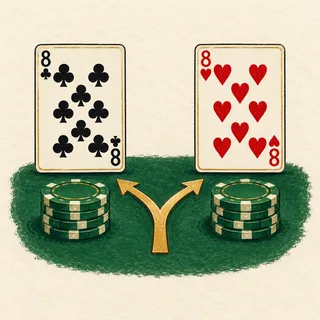
Illustration: Two eights separated into two hands with matching stakes
Split

Link

Players may split their hands if the first two cards they receive are of the same rank. If they do, the player makes a second bet, and the two cards are played as separate hands. Each hand is now dealt a second card, after which the hands may usually be played as normal.

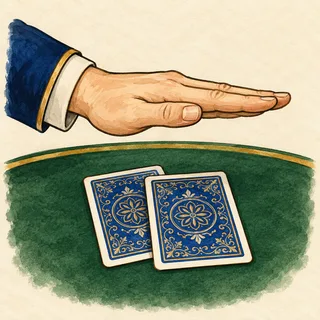
Illustration: A flat hand held above cards to signal standing
Stand

Link

The decision to stop taking more cards is known as standing. This ends the player’s ability to play their hand. In most casinos, dealers must stand with a hand of 17 or higher.

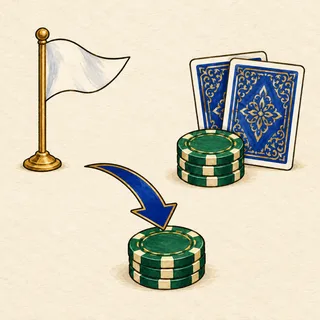
Illustration: A white flag and two chip piles showing a partial return
Surrender

Link

In some casinos, players will have the option to surrender, giving up their hand and losing only half of their initial bet. This option is normally invoked in situations where the player has almost no hope of winning the hand. There are two versions of this rule: early surrender, where the player may surrender before the dealer checks for blackjack, and late surrender, where the dealer checks for blackjack before the player has the surrender option.

Illustration: The exposed nine beside a face-down dealer card
Up Card

Link

The dealer’s exposed card is known as the up card. The rank of the up card is the only information the player has about the dealer’s hand, and is therefore an important factor in determining player strategy.

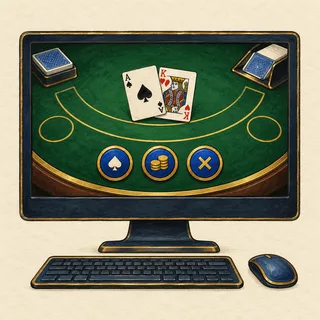
Illustration: An illustrated monitor displaying a virtual blackjack table

Similar to a video poker machine, it is a virtual game played without cards or a dealer and is similar to online blackjack. Video blackjack machines can be found at casinos and bars.

Is blackjack insurance worth it?

Watch the video.

English narration and on-screen captions. Illustrative examples use practice chips with no cash value.

Read the video transcript

Blackjack insurance sounds reassuring. But it’s a separate bet on the dealer having blackjack, not on your hand winning.

You’ve bet ten practice chips and have sixteen. The dealer shows an ace. Insurance costs up to five more chips. Suppose you take it. If the dealer has blackjack, insurance pays ten chips in profit, and your five-chip insurance stake comes back. Your main ten-chip bet loses. Overall, you break even. If the dealer doesn’t have blackjack, you lose the five insurance chips, and your main hand continues.

For basic-strategy play, skip insurance. Its two-to-one payout doesn’t make it a good-value bet without extra information about the remaining cards. Keep the side bet separate from your playing decision.

Translations: Begriffe