Blackjack Errors to Avoid

Recognise the mistake · Practise the decision

Blackjack is easy to start learning, but that does not make it easy to beat. Rules, hand decisions and spending limits matter more than confidence or a recent result. This guide turns common mistakes into specific habits you can practise.

Casinos generally have a mathematical advantage. Card counting uses exposed-card information in suitable continuing-shoe games; it does not guarantee profit or make winning simply a matter of playing longer.

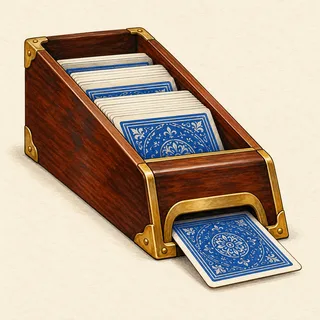
Illustration of a dealing shoe
1. Skipping the table rules

Before playing, check the blackjack rules: the blackjack payout, whether the dealer hits soft 17, the number of decks, and the options for splitting, doubling and surrender. A familiar-looking table can use different rules.

For example, a natural blackjack on a 10-chip stake earns 15 chips at 3:2 but only 12 chips at 6:5, with the original stake returned in both cases. That is a payout difference, not a prediction of a session result.

Better approachRead the rules first and use a strategy chart that matches that game. Check every new table, including free games.
Source: Wizard of Odds on blackjack rules and short payouts

Illustration of different card combinations with the same total
2. Treating every 16 the same

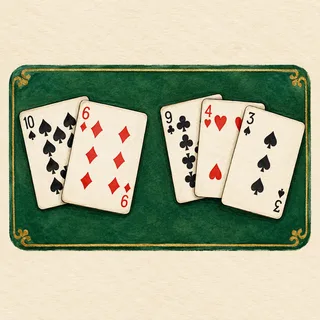
Fear of busting is not a strategy. A total of 16 alone does not tell you whether to hit or stand: distinguish a hard hand, a soft hand and a pair, then consider the dealer’s upcard and the available actions.

For example, consider an initial ten and six in a six-deck game where the dealer stands on soft 17 and checks for blackjack. Against a dealer six, basic strategy says stand. Against a dealer ten, take late surrender if it is offered after the blackjack check; otherwise hit. This is not advice for a soft 16 or a pair of eights, which have separate strategy rows. Use basic strategy matched to the exact rules and hand. A correct decision can still lose.

Better approachIdentify the hand type, dealer upcard and available actions. A hard hand, a soft hand and a pair can require different decisions.
Illustration of increasing chip stacks
3. Expecting a streak to change your luck

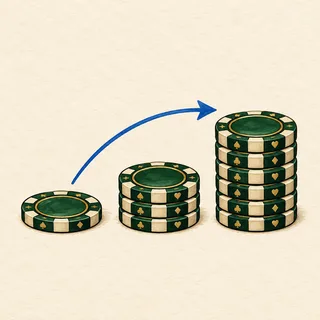
A run of losses does not make a win due, and a winning streak does not promise another win. Changing your stake in response to a streak does not by itself improve the next hand’s odds. Playing decisions and table rules still matter. In a continuing shoe, the cards already dealt can change the remaining composition; card counting uses that information, not a belief that luck must reverse.

Our Martingale loss ladder shows how quickly doubling a stake can reach a budget or table limit.

Better approachSeparate playing decisions from bet size. Use the hand and rules to choose an action, not a feeling that a win is due.
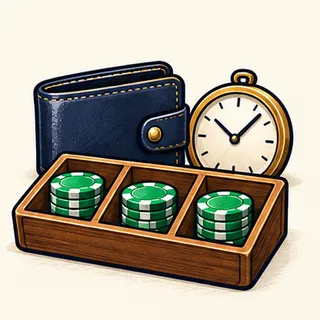
Illustration of a wallet, chips and a clock
4. Chasing losses or ignoring your limits

Set spending and time limits before you play. Keep money for bills, savings and other essentials outside your gambling budget. Splits and doubles can require extra bets, so an opening stake is not always the full exposure for a round.

A winning streak does not guarantee another win, and following a betting system does not guarantee you will break even. Increasing a budget or reloading to recover a loss is new spending, not a reset.

The bankroll management guide includes a practice-chip comparison and a pre-play budgeting checklist.

Better approachStop at the limit you set rather than moving it. Treat gambling as entertainment and only risk money you can afford to lose.
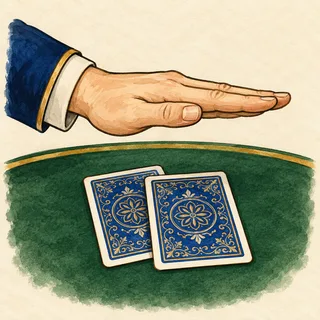
Illustration of a hand signalling a stop above playing cards
5. Playing when you cannot focus

Being tired, distracted, upset or impaired can make it harder to follow your decisions and limits. There is no need to keep playing because a table is moving quickly or other people want another round.

If gambling is becoming difficult to control, the responsible gaming page lists support and practical options.

Better approachTake a break or stop. Use free practice when you want to learn at your own pace, and avoid gambling while impaired.
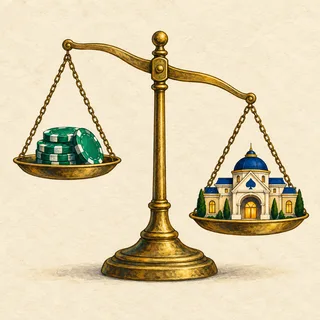
Illustration of chips and a casino symbol on a balance scale
6. Treating a recommendation as a guarantee

Research the exact casino and website before registering or depositing. Check its licence with the relevant regulator, your location’s eligibility, withdrawal requirements and any promotional restrictions. A review or a listing is a starting point, not a guarantee of safety, availability or a payout.

Use our online blackjack guides alongside the operator’s current terms and the regulator’s own records.

Better approachVerify the details that apply to you. Do not assume a familiar brand name, advertised bonus or recommendation is enough.

Spot the mistake: three misleading claims

Watch the video.

English narration and on-screen captions. Illustrative examples use practice chips with no cash value.

Read the video transcript

Spot the mistake in these three blackjack claims. We are checking the reasoning, not judging a hand by whether it happened to win.

First: always hit sixteen. That leaves out the dealer’s upcard, your exact hand, and the rules. A hard sixteen, a soft sixteen, and a pair of eights are not interchangeable. Use the matching strategy chart rather than a slogan. Second: I lost, so my decision was wrong. One result cannot tell you that. The better choice can still lose; compare the decision with the information available before the next card, not after seeing it. Third: if I stick to my betting system, the worst result is breaking even. False. A betting system cannot promise that floor. You can lose your entire playing budget, and increasing stakes can make losses grow faster. A planned limit helps control what you risk, not guarantee what you win.

Before playing, check the rules and set an affordable limit. Practise decisions without money, and stop rather than trying to win back a loss.

♧ Same hard 16, different decision

Example rules: six decks, dealer stands on soft 17 and checks for blackjack. Your initial cards are a ten and a six. These examples do not apply to soft 16 or a pair of eights.

Dealer shows 6

Stand

For this hand and these rules, basic strategy says to stand.

Dealer shows 10

Surrender, if available

Use late surrender after the dealer’s blackjack check. If surrender is unavailable, hit.

A correct decision can still lose. See the Wizard of Odds multi-deck strategy reference and our rules-based strategy charts.

♧ Check your understanding

Choose an answer in your head, then reveal the explanation. No chips or money are involved.

1. You have lost four ordinary hands in a row. Is a win now due?

Reveal the answer

No. A win/loss streak does not by itself establish better odds for the next hand. Counting exposed cards in a suitable continuing shoe uses different information; it is not the belief that luck must turn.

2. In the example above, you have ten-six against a dealer ten, and surrender is unavailable. Hit or stand?

Reveal the answer

Hit. Under the stated rules, that is the basic-strategy fallback when late surrender is unavailable. The same total against a dealer six calls for standing.

3. A session finishes ahead. Does that prove your betting pattern works?

Reveal the answer

No. One session does not establish a long-term advantage. Keep your original limits and review decisions separately from whether a particular hand or session won.

♧ Before your next session
  • I have checked the exact rules and payout.
  • I have a matching strategy reference.
  • I have set a spending limit and finishing time.
  • I am focused and comfortable stopping.
  • I understand that correct play can still lose.

Practise with virtual chips →

Learn unfamiliar vocabulary in the illustrated blackjack glossary. Practice chips have no cash value.