The dealer runs the hand, manages the cards and settles wagers under the table’s rules. The dealer does not choose a strategy in response to your cards: a posted hit-or-stand rule determines how the dealer finishes a live hand.
Where the dealer fits at the table
DEALER SIDE
Shoe or dealing deck
Dealer cards and chip tray
Discard area
Player cards sit above each main betting spot
First base Acts early
Middle seats
Third base Acts late
PLAYER SIDE
Schematic illustration, not a scale plan. Equipment position, seat count and betting order can vary; confirm the actual table’s procedure.
A typical face-up shoe hand
Betting: players place wagers before the dealer closes betting.
Initial deal: cards are dealt to occupied hands and to the dealer using the venue’s procedure.
Dealer-blackjack procedure: checking, insurance and the timing of a hole card depend on the game. Do not assume every table uses the US peek method.
Player decisions: each player completes permitted hits, stands, doubles, splits or surrender in order.
Dealer’s turn: the dealer reveals or completes the hand and follows the table’s fixed drawing rule.
Settlement: the dealer collects losing wagers, pays winners and clears the cards.
This is a teaching sequence; no-hole-card games and variants can change it. See the rules guide for the important differences. Blackjack rules reference
Soft 17 is a table rule
Ace–6 can total 7 or 17, making it a soft 17. At an S17 table the dealer stands on that hand; at an H17 table the dealer hits. The rule applies even when your own hand makes another action seem more attractive. Read the sign rather than guessing from a previous round.
Common signals at a face-up table
Communicating your decision
Action
Usual communication
Hit
Tap the table behind your cards.
Stand
Wave your hand horizontally over the cards.
Double
Place the permitted additional wager beside the original and clearly state the action.
Split
Place the additional wager beside the original and clearly ask to split.
Surrender
Ask whether it is offered and confirm the approved signal before acting.
These are common conventions, not universal instructions for every pitch game or venue. Keep cards untouched in a face-up game and ask the dealer if unsure. Venetian face-up play instructions
Questions to ask before the deal
Ask about blackjack payout, soft 17, surrender, doubling, split limits and whether joining mid-shoe is allowed. For an accessibility need, ask staff to agree a clear way to communicate decisions before you wager.
Considering dealer work?
Check the employer’s current job requirements and the local licensing authority. Training, licensing, pay and tipping arrangements vary; old salary estimates or a universal training duration would be misleading. A good preparation plan includes accurate payouts, chip handling, rule knowledge and calm communication.
In a 2019 interview, Heather Ferris, who started in the casino industry as a dealer and later became an adjunct professor at UNLV, told us that you don’t have to pay for school to get a job as a casino dealer, while noting that every casino is different.
Practise decisions in our free game; it is not a substitute for supervised dealer training.
 The dealer runs the hand, manages the cards and settles wagers under the table’s rules. The dealer does not choose a strategy in response to your cards: a posted hit-or-stand rule determines how the dealer finishes a live hand.
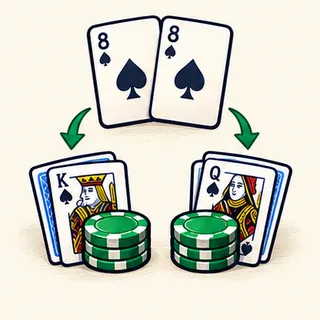 Ask about blackjack payout, soft 17, surrender, doubling, split limits and whether joining mid-shoe is allowed. For an accessibility need, ask staff to agree a clear way to communicate decisions before you wager.




 Bovada Casino